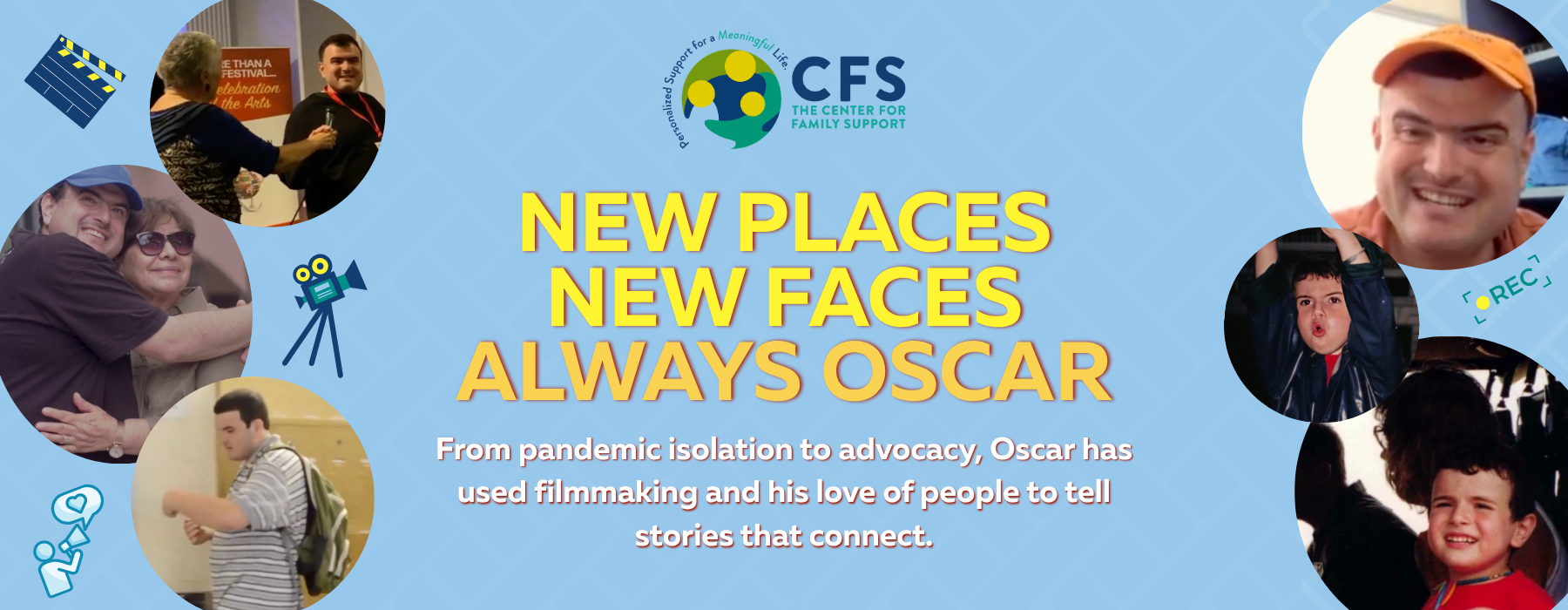
Some people collect souvenirs. Oscar collects people.
Oscar is a storyteller whose love of filmmaking begins—and ends—in conversations with all the characters whom he has collected throughout his life.
Spend just a minute with Oscar and you’re immediately lifted by his infectious enthusiasm. Every conversation quickly turns to something he’s excited about: a film festival, a new project, an advocacy conference, a volunteer event, or someone he’s recently met.
For Oscar, there’s always another adventure just over the horizon.
What excites him most isn’t simply making films. It’s where those films might take him—the opportunity to meet new people, share his story with new audiences, and, if he’s lucky, travel somewhere new.
“It’s like I’m going to more places,” he says with a smile.
Oscar’s filmmaking journey didn’t begin with the happiest of stories. When the COVID-19 pandemic brought everyday life to a halt, he suddenly found himself separated from what he calls his “whole world.”
“I couldn’t see people. It made me very upset… I could only call my whole world from my couch in my apartment in the Bronx. I couldn’t see anybody. It was hard.”
Looking for a way to reconnect him with the people he missed most, one of Oscar’s transition counselors suggested combining his love of people with his love of storytelling. The idea was simple: interview the people who had shaped his life.
Those conversations became The Oscar Show, a YouTube interview series featuring mentors, advocates, and community leaders Oscar considers his heroes.
“The Oscar Show is where I interview people who are heroes in my life,” Oscar explains.
Those interviews eventually evolved into My Independent Life, a documentary created in collaboration with Oscar’s longtime friend and filmmaking mentor, Allie Tearney. Together, Oscar and Allie develop interview questions, secure filming locations, review footage, and make creative editing decisions. Their newest documentary, My Community, continues that collaboration, capturing Oscar’s life through footage they film side by side.
For Oscar, filmmaking has become much more than holding a camera. It has taught him how to collaborate, solve problems creatively, and tell stories alongside others.
Just as importantly, it has opened doors.
Oscar loves submitting his films to festivals—not only to share his work, but because each screening brings the chance to meet new people, discover new audiences, and sometimes even travel somewhere he’s never been before.
Most recently, Oscar shared his story through an OPWDD documentary produced in partnership with Georgetown University’s National Center for Cultural Competence. The film explores how technology can help people with intellectual and developmental disabilities (I/DD) build more connected and independent lives.
Looking back, Oscar sees filmmaking as much more than a creative outlet.
“My movies and the technology I used during the pandemic have helped me in my journey as an advocate,” he says.
For Oscar, filmmaking is a way to share his story, amplify the voices of people he admires, and show what’s possible for people with I/DD.
“By making these videos, Oscar creates meaning for himself,” his mother, Vivian, explains. “His films also teach people that individuals with I/DD can live rich and fulfilling lives.”
When asked what he enjoys most about filmmaking, Oscar doesn’t mention cameras.
“Meeting the people… and editing.”
That same love of connecting with others carries through every part of his life.
Oscar has worked at Shake Shack for nearly eleven years. He serves as Vice President of Strong Island Voices, participates in self-advocacy through organizations including CFS, YAI, and Best Buddies, and regularly volunteers throughout his community.
Whether he’s welcoming guests at a CFS bowling fundraiser, helping set up Community Days, supporting the annual coat drive, or speaking at advocacy conferences across New York State, Oscar approaches every opportunity with the same warmth, curiosity, and boundless enthusiasm.
Senior Vice President of Development Ted Traver has known Oscar for years.
“Oscar’s number one priority is meeting new people, doing new things, opening new doors, going new places, sharing his story, and working,” Ted says.
His mother perhaps says it best.
“I don’t think he cares what kind of camera he has. It’s a vehicle for being heard, meeting people, talking to people, and traveling places.”
Perhaps that’s the best way to understand Oscar.
The films, the festivals, the advocacy, the volunteer work, and the friendships are all part of the same story.
For Oscar, filmmaking isn’t just about making movies.
It’s about creating connections.
Because every conversation is a chance to meet someone new—and every person has a story worth telling.